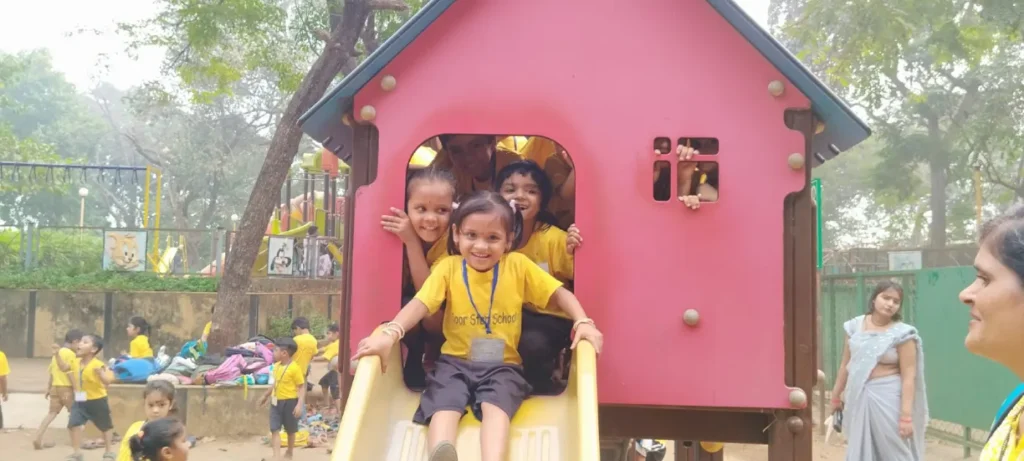
The Society for Door Step School (DSS) is a registered non-profit organisation that has been working since 1989 to promote education and build foundational literacy among socially and economically disadvantaged children across more than 35 urban slum communities in Mumbai and Pune.
For many children growing up in vulnerable urban settings—on pavements, in slums, at construction sites, or in-migrant settlements education remains out of reach. Frequent migration, poverty, lack of documentation, irregular schooling, and the need to contribute to family income often leads to non-enrolment, early dropouts, and poor learning outcomes. Door Step School was founded to address these realities by ensuring that circumstances do not stand in the way of a child’s right to learn.
Guided by the belief “Let the school come to the children,” Door Step School brings education directly to where children live and work. What began in 1989 with a small group of children who had dropped out of school has grown into a solution-driven organisation that has reached over 1.5 lakh children in Mumbai and Pune. Our approach meets children where they are academically, physically, and emotionally—supporting helping them to enter school, stay in school, and progress with confidence.
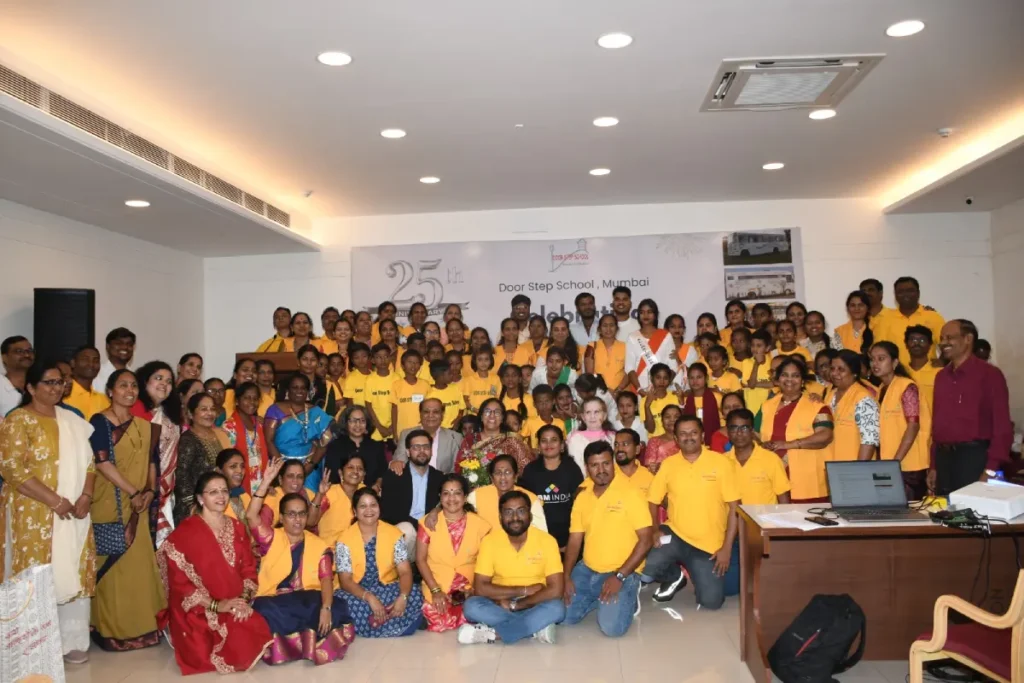
Through School on Wheels, we offer flexible non-formal education at practical locations/times. Our buses-turned-classrooms hit 4+ spots daily, reaching street children & vulnerable kids with quality education
We support children to remain in formal schooling through remedial education, reading programmes, parent engagement, and close coordination with schools and communities.
Our focus on Foundational Literacy and Numeracy (FLN), Structured Math and Concept Learning (SMCL) labs, and teacher training strengthens learning outcomes and classroom practices.
We integrate life skills education, digital literacy, health and nutrition linkages to support the overall well-being of every child.
Each year, Door Step School conducts direct interventions in communities and municipal schools, reaching over 1,20,000 children annually by taking education to their very doorstep.
To be an instrumental force that brings development to children.
To bridge the education divide by delivering innovative programs that enable vulnerable children to access literacy and transition to formal education for a brighter future.
Primary education for all children up to 14 years of age
For us, education is about far more than literacy. It is about protection, dignity, and opportunity. Many of the children we serve are at risk of exploitation and exclusion. By creating safe, supportive learning environments and working closely with families and educators, we help children build confidence, agency, and a pathway to a better future. Many of our students grow up to become advocates for education within their own communities. As we continue to expand our reach and deepen our impact, our purpose remains clear: to bridge the gap between access and learning, and to ensure that no child is left behind because of their circumstances.
We envision a world where every child can read, learn, thrive, and become equipped with the tools to shape their own future. Over the past three decades, Door Step School has grown into a solution-driven organisation in India’s social sector, pioneering innovative approaches to address some of the country’s most pressing educational challenges.
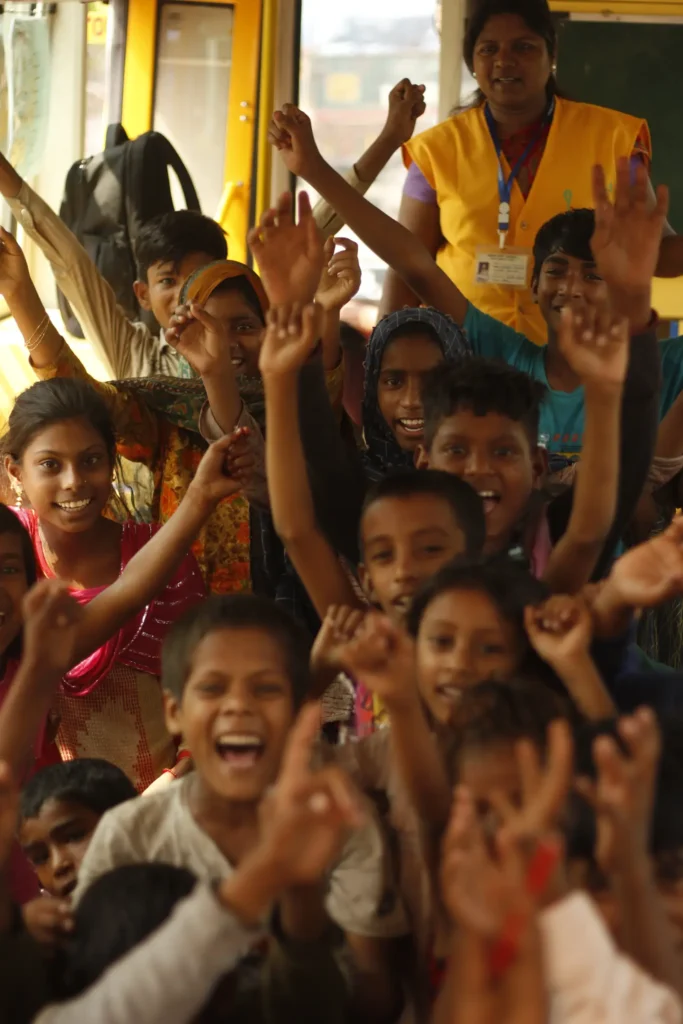
At Door Step School, we believe that a strong foundation can change the course of a child’s life. Our future vision is to expand our work with Ashram Schools and reach vulnerable children across multiple states in India especially those affected by migration, poverty, and disrupted schooling ensuring that every child attains foundational literacy and numeracy and is empowered to thrive in learning and in life. Door Step School’s future vision focuses on:
• Expanding to more States across India
• Strengthening FLN outcomes for children aged 3–10
• Deepening work with Ashram Schools and tribal communities
• Scaling teacher training and system-support programmes
• Leveraging research and evidence to inform education practice